
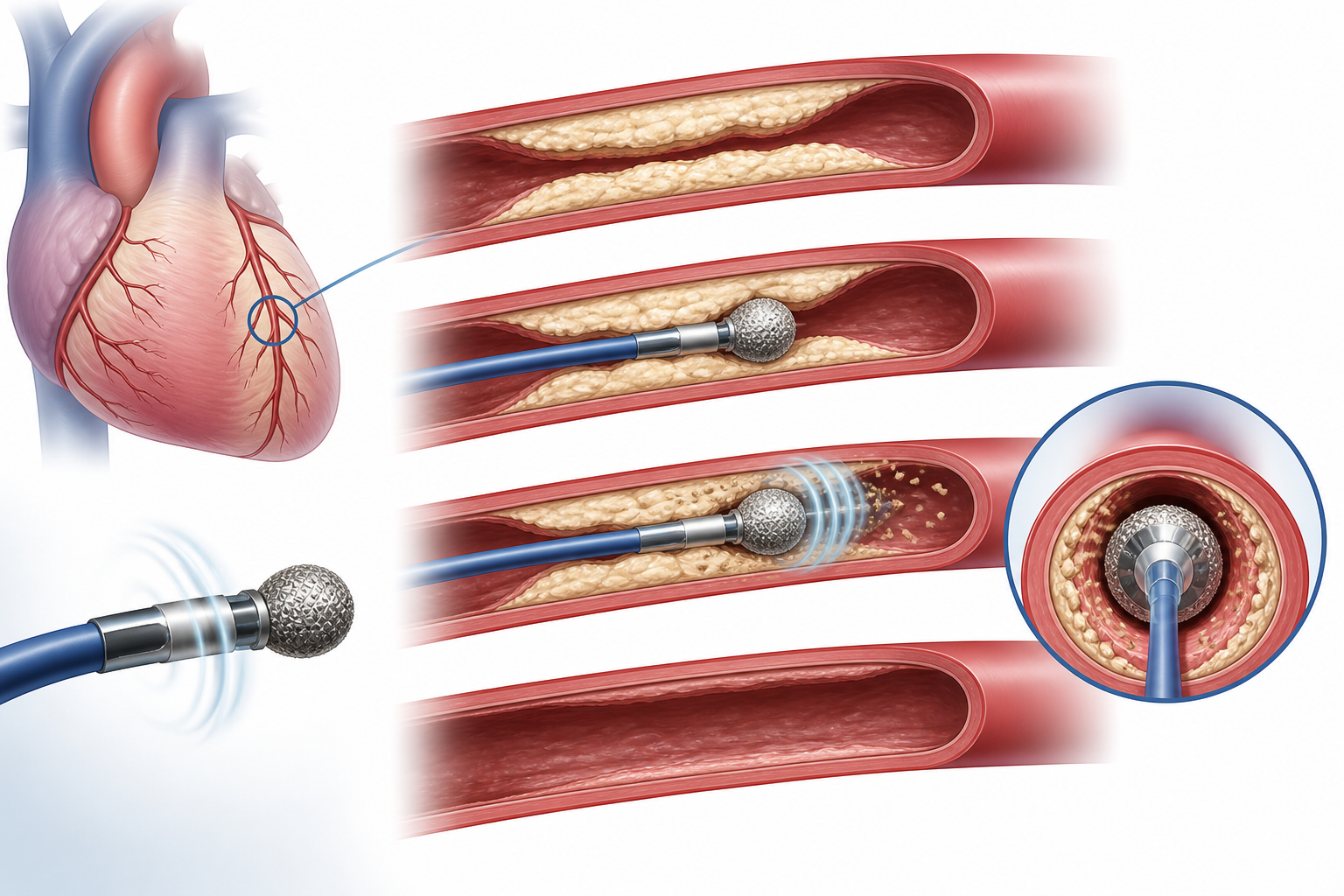
Rotational atherectomy (rotablation) uses a tiny diamond-coated burr spinning at high speed to modify stubborn coronary calcium.
It is preparation, not the whole treatment
Rotablation rarely stands alone. It prepares a rock-hard segment so balloons and stents can do their job. It is often paired with imaging and sometimes with lithotripsy.
What patients notice
The procedure still takes place in a cath lab under local anaesthetic with sedation as needed. You will not feel the burr itself in the way people imagine drilling — the experience is closer to other angioplasty procedures.
Safety and expertise
Like all advanced tools, rotablation is safest in experienced hands with careful case selection. Ask your interventional cardiologist how calcium will be assessed and modified in your plan.